
Physics Practicals Class XI
Force constant of a helical spring
Objective of the Experiment :
To find the force constant of a helical spring by plotting a graph between load and extension.
Theory
What is a helical spring?
The helical spring, is the most commonly used mechanical spring in which a wire is wrapped in a coil that resembles a screw thread. It can be designed to carry, pull, or push loads. Twisted helical (torsion) springs are used in engine starters and hinges.
Let’s study how we can use the helical spring to do our experiment.
The helical spring is suspended vertically from a rigid support. The pointer is attached horizontally to the free end of
.jpg)
spring. A metre scale is kept vertically in such a way that the tip of the pointer is over the divisions of the scale; but does not touch the scale.
Helical spring works on the principle of Hooke’s Law. Hooke’s Law states that within the limit of elasticity, stress applied is directly proportional to the strain produced.

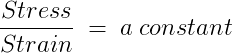
When a load ‘F’ is attached to the free end of a spring, then the spring elongates through a distance ‘l’ .Here ‘l’ is known as the extension produced. According to Hooke’s Law, extension is directly proportional to the load.
This can be represented as:


where ‘k’ is constant of proportionality. It is called the force constant or the spring constant of the spring.
A graph is drawn with load M in kg wt along X axis and extension, l in metre along the Y axis. The graph is a straight line whose slope will give the value of spring constant, k .
Learning Outcomes:
- Students understand the principle of Hooke’s Law.
- They learn about the force constant of a spring.
- Students understand the relationship between force applied and extension produced in a spring.
Materials required
- A spring
- A rigid support
- Weight hanger
- 50g or 20 g slotted weights
- A vertical wooden scale
- A fine pointer
Real Lab Procedure
- The helical spring is suspended vertically from a rigid support.A pointer is attached horizontally at the free end of the spring.
- A metre scale is kept vertically in such a way that the tip of the pointer is over the divisions of the scale, but does not touch the scale.
- A dead weight, w0 gwt is suspended by the weight hanger to keep the spring vertical. The reading of the pointer on the metre scale is noted.
- Now, gently add a suitable load of 50 g slotted weights to the hanger and the reading of the pointer is noted.
- The weights are added one by one till the maximum load is reached. In each case, the reading of the pointer is noted.
- The weights are then removed one by one and the reading of the pointer is noted in each case of unloading.
- The average of the readings for each load during loading and unloading is calculated in each case. Let z0, z1, z2, z3…etc.., be the average readings of the pointer for the loads w0, (w0+50), (w0+100), (w0+150) etc.
- From this, extension, l (in m) for the loads (w0+50), (w0+100), (w0+150) etc. , are calculated as (z1-z0), (z2-z0), (z3-z0) respectively.
- In each case, k =mg/l is calculated. The average value of k gives the spring constant in N/m.
- A graph is drawn with load M in kg wt along X axis and extension, l in metre along the Y axis. The graph is a straight line. The reciprocal of the slope of the graph is determined. It gives spring constant in kg wt/m. The spring constant in N/m is obtained by multiplying this with g=9.8 m/s2.
Observations:
Table for load and extension:
| Serial No of Obs. | Load on hanger(W) = applied force (F)(kg wt) |
Tension= Mg (N) | |||||
| Reading of position of pointer tip |
Extension l= z x 10-2(m) |
 N/m N/m |
|||||
| Loading X(cm) | Unloading Y(cm) | Mean,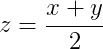 (cm) (cm) |
|||||
|
Dead load(W0) |
|||||||
| (W0+ .05) | |||||||
| (W0+.1) | |||||||
| (W0+.15) | |||||||
| (W0+.2) | |||||||
| (W0+.25) | |||||||
| (W0+.3) | |||||||
Mean k=…………N/m.
Spring constant, k from load extension graph

AB=---------kg wt
BC=---------m
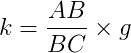 = ---------Nm-1
Result
By calculation, the force constant of the given spring = .............N/m.
From load-extension graph, the force constant of the given spring =……….N/m
Viva-Voce [Force Constant Of Spring]
Question.1. Define a rigid body ?
Answer. A body is said to be a rigid body, if it suffers absolutely no change in its form (length, volume or shape), under the action of forces applied on it.
Question.2.Define an accelerating force ?
Answer. An unbalanced force which will produce acceleration in a body, is called an accelerating force.
Question.3. Define a deforming force ?
Answer. A balanced force producing deformation in a body, is called a deforming force ?
Question.4. Define elasticity?
Answer. The property of a deformed body, by virtue of which it tends to regain its original form, when the deforming forces have been withdrawn, is called elasticity. Bodies having this property, are called elastic bodies.
Question.6. How is stress measured ?
Answer. Stress is measured by the external deforming force applied per unit area, within elastic limit.
Question. 7. Give unit of stress ?
Answer. The S.I. unit of stress is newton per metre2 (N m-2).
Question. 8. Define elastic limit ?
Answer. The maximum stress up to which a body remains elastic, is called elastic limit.
Question. 9. Define normal stress ?
Answer. Stress is normal when deforming force is applied perpendicular (normal) to the surface of the body e.g., loaded wire, compressed body.
Question. 10. What deformation is produced by a normal stress?
Answer. Normal stress produces change in length and volume.
Question. 11. Define tangential stress ?
Answer. Stress is tangential when deforming force is applied along (tangential) to the surface of the body, e.g., a book pressed by a hand tangentially.
Question. 12. What deformation is produced by a tangential stress ?
Answer. Tangential stress produces change is shape.
Question. 13. Define a strain ?
Answer. Proportional change in the form of a body, is called strain on the body.
Question. 14. Give unit of strain ?
Answer. Strain has no unit because it is ratio of two similar quantities.
Question. 15. Define longitudinal strain ?
Answer. The ratio of the change in length to original length of the body, is called longitudinal strain on the body.
Physics is one of the most important subjects in Class 12. As the CBSE exam approaches, students get busy preparing for different subjects. But an essential part of the CBSE exam is the practical exams which consist of 30 marks.
Students must know all the experiments along with theorems, laws, and numerical to understand all the concepts of 12th standard physics in a detailed way. Two experiments (8 + 8 marks) are asked from each section in the practical exam. The experiment records and activities consist of 6 marks, the project has 3 marks and viva on the experiment consist of 5 marks.
The Physics Practicals For Class 12 CBSE is given here so that students can understand the experiments in a better way. Students are suggested to study the theory and law behind the experiment properly before performing the experiment.Also Go through the viva voce questions and answers for each and every experiment which are provided on the website .